
Your Global Health Resource
What is Chronic obstructive pulmonary disease (COPD)?
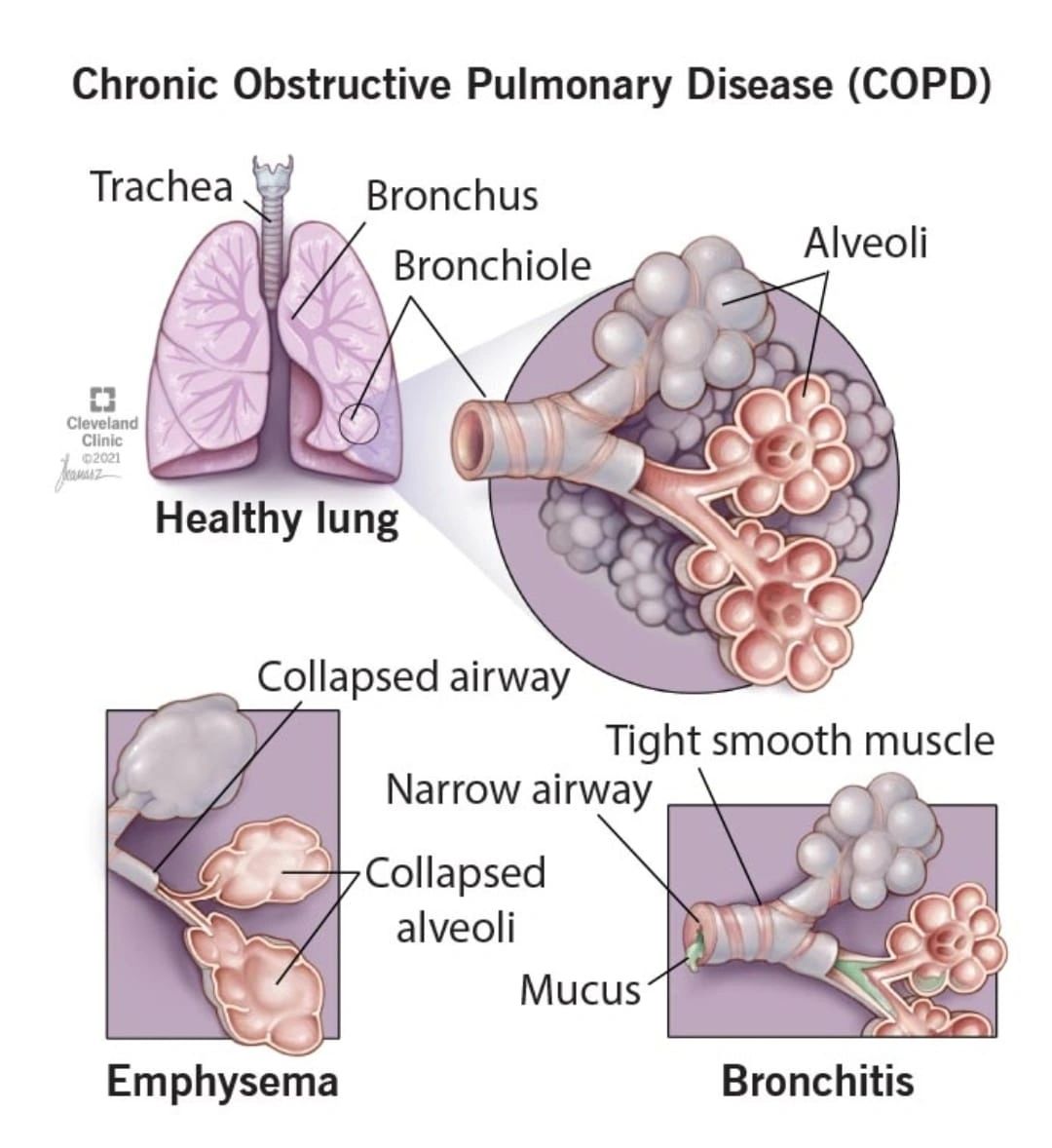
Chronic obstructive pulmonary disease (COPD) is a group of chronic inflammatory lung diseases that cause airflow limitation, leading to difficulties in breathing, coughing, and mucus production. It includes chronic bronchitis and emphysema, both of which involve progressive and irreversible damage to the airways and lung tissue. COPD is the third leading cause of death in the United States. Chronic bronchitis is often caused by smoking, which irritates the bronchial tubes, destroys cilia (hair-like structures in the airways), and results in swelling, excessive coughing, and mucus production.
Emphysema involves the destruction of the alveoli (air sacs) in the lungs, reducing the surface area available for gas exchange. Risk factors for developing COPD include smoking (the primary risk factor), environmental exposures (such as those experienced by hairdressers, cement cutters, bricklayers, carpenters, and painters), and genetics (such as alpha-1 antitrypsin deficiency, a genetic risk factor).
Symptoms of COPD include persistent cough, excessive sputum production, wheezing (in chronic bronchitis), and shortness of breath (especially with physical activity) and chronic cough (in emphysema), as well as fatigue. Differential diagnoses for COPD include asthma, bronchiectasis, heart failure, and pulmonary fibrosis.
Diagnosis of COPD involves a patient history of smoking and/or exposure, a physical exam, pulmonary function tests (such as spirometry), chest X-ray or CT scan, and arterial blood gas analysis. Levels of COPD (stages) are categorized as mild (FEV1 � 80% predicted), moderate (FEV1 50-79% predicted), severe (FEV1 30-49% predicted), and very severe (FEV1 < 30% predicted with chronic respiratory failure). Hypoxemia (low blood oxygen levels) is common in COPD, especially during exacerbations or advanced stages, often requiring permanent oxygen therapy
Exacerbations of COPD are acute worsening of symptoms, often triggered by infections or environmental factors. Patients already diagnosed with COPD should seek medical attention if they experience an increase in cough, change in the color of mucus, or worsening shortness of breath. Smoking is the primary cause of COPD, responsible for about 80% of cases. Exposure to dust, fumes, and pollutants in the workplace can also increase the risk of developing COPD. Treatments for COPD include bronchodilators (to relax the muscles around the airways), corticosteroids (oral or inhaled, to reduce inflammation), oxygen therapy (to improve oxygen levels in the blood), pulmonary rehabilitation (an exercise and education program), and in severe cases, lung volume reduction surgery or lung transplant. Treatment should be tailored to the stage of the
disease. Prophylaxis for COPD includes smoking cessation (the most important
preventive measure) and avoiding exposure to lung irritants and pollutants.
The prognosis of COPD is variable and depends on the stage of the disease and individual factors such as smoking history and overall health. While there is no cure for COPD, early diagnosis and management can help slow its progression and improve quality of life.
Raul Ayala MD
@MyDoctorOnCall.com
