
Your Global Health Resource
What are varicose veins?
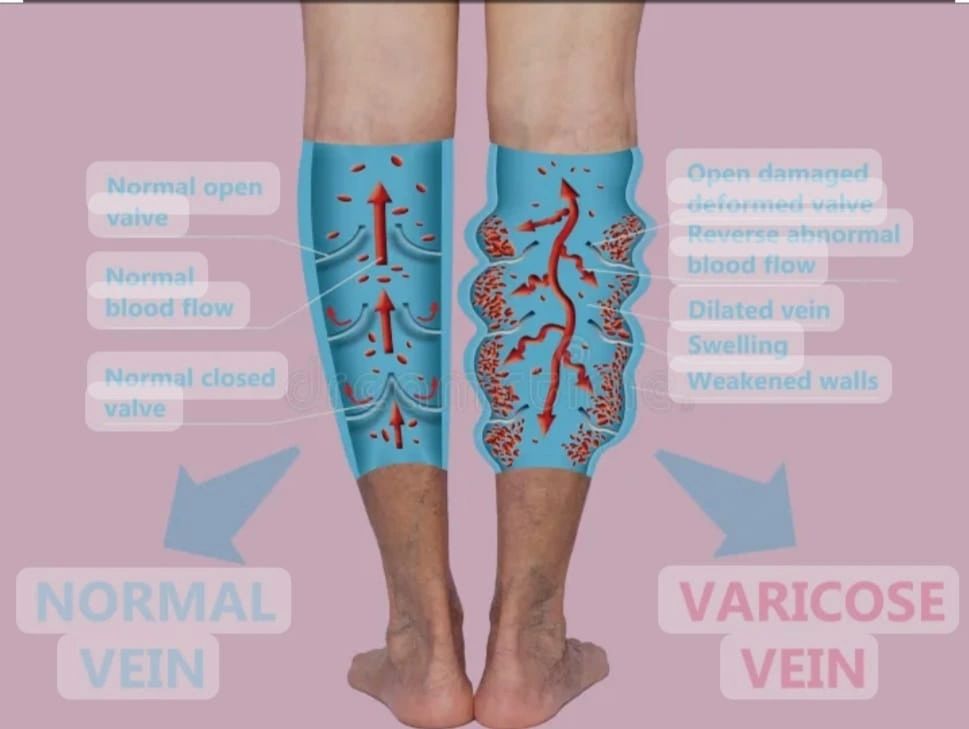
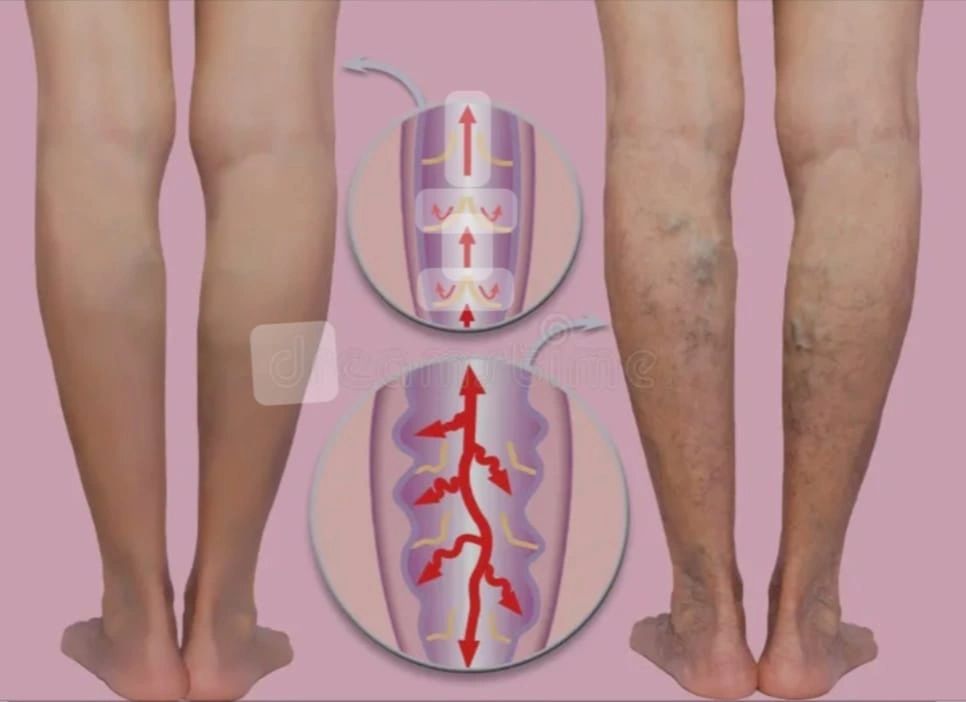
Varicose veins are enlarged and twisted veins that typically appear in the legs, causing discomfort such as pain, swelling, and a feeling of heaviness.
Individuals most predisposed to varicose veins include those with a family history of the condition, as well as individuals who spend prolonged periods standing or sitting, pregnant women, and those who are obese.
A familial predisposition to varicose veins suggests that genetics may play a
role in their development, although other factors such as lifestyle and
occupation may also contribute to their onset.
Anatomy of a varicose vein:
Varicose veins are characterized by faulty valves that fail to allow blood to flow properly, resulting in blood pooling and vein dilation. This can occur in the superficial and deep veins of the legs, often manifesting as visibly enlarged and twisted veins beneath the skin.
Types of varicose veins:
– Hemorrhoids are a type of varicose vein found in the rectum and anus, which can cause pain, itching, and bleeding. Hemorrhoids worsen with spicy food, alcohol, constipation, and prolonged sitting. While creams can provide temporary relief, surgery is often necessary. Hemorrhoids are categorized into three anatomical packages, and surgery may address one package at a time.
– Varicose veins in the scrotum, known as varicocele, can affect male fertility and typically present with heaviness, discomfort, or dull pain in the testicle.
The treatment for varicocele is surgical.
Diagnosis of varicose veins:
Diagnosis is typically made through physical examination and inquiry into symptoms. In some cases, additional tests such as ultrasounds may be performed to assess blood flow in the veins.
Surgical treatment of superficial and deep varicose veins:
Surgical treatment may involve the removal of superficial varicose veins through procedures such as phlebectomy or laser ablation. For deep varicose veins, procedures such as sclerotherapy or embolization may be performed to close the affected veins.
There is no oral medication treatment for varicose veins, but medications may be prescribed to alleviate symptoms such as pain and swelling. Stockings can also be used to manage symptoms while awaiting surgery. Varicose veins can increase the risk of blood clots, which can dislodge and cause a pulmonary embolism, a potentially life-threatening condition in which a clot blocks an artery in the lungs.
Post-thrombotic syndrome is a complication of varicose veins that can occur after a blood clot in a deep vein of the leg, and may cause chronic swelling, pain, and changes in the skin, often characterized by red or violet discoloration. This condition is sometimes confused with cellulitis, an infection of the skin.
Other complications of varicose veins may include skin ulcers, thrombophlebitis (inflammation of a vein with the formation of a clot), and changes in skin pigmentation.
Varicose veins are classified into different stages based on their severity and associated symptoms, ranging from barely visible veins to those causing serious complications such as venous ulcers.
The prognosis for varicose veins is generally good with proper treatment,
although in severe or untreated cases, serious complications can occur. Early
and appropriate management can prevent complications and improve quality
of life.
RaulAyalaMD
@MyDoctorOnCall.com
